


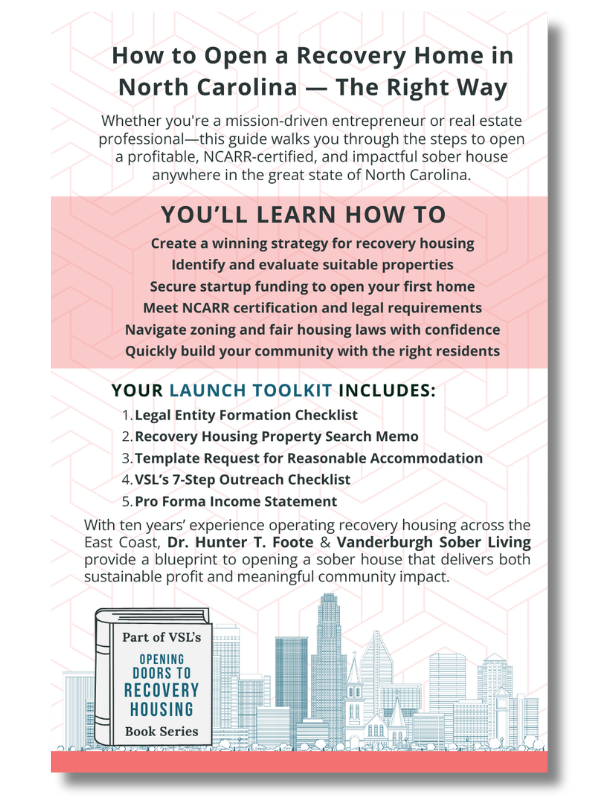
What You'll Learn About Starting a Sober Living Home in North Carolina
Opening a sober living home in North Carolina requires more than finding a property and filling beds. New operators need to understand recovery housing terminology, NCARR certification expectations, North Carolina zoning and Fair Housing considerations, property layout, referral development, and the practical business steps required before opening day. This guide is designed to help aspiring sober living operators, real estate investors, behavioral health professionals, and community leaders understand the major issues involved in launching a compliant, sustainable recovery home in North Carolina.
North Carolina Recovery Housing Basics
Learn how sober living homes, recovery homes, and recovery residences fit into the broader continuum of care, and understand the role these homes play in supporting long-term recovery.
North Carolina Certification and Standards
Understand how North Carolina Association of Recovery Residences certification, documentation, policies, inspections, and sober living standards may affect the launch process in North Carolina.
Zoning and Fair Housing Considerations
Learn how to think about zoning, reasonable accommodations, neighborhood concerns, and local approval issues before choosing a property.
Property Search and Home Layout
Evaluate whether a property can function as a safe, practical, and financially sustainable sober living home before moving forward with a lease or purchase.
North Carolina Business Setup and Financial Planning
Use startup checklists, entity planning, and pro forma tools to understand your launch costs, operating model, and financial assumptions.
Referral Outreach and Occupancy
Build a North Carolina sober living referral network with treatment providers, courts, recovery organizations, community partners, and other sources of resident referrals.

Included: Your North Carolina Sober Living Launch Toolkit

Legal Entity Formation Checklist
A step-by-step guide to forming a compliant legal entity in North Carolina, such as a corporation or LLC.

Property Search Memo
A ready-to-share memo you can provide to real estate agents or landlords to clearly explain recovery housing use, needs, and expectations.

FHA Zoning Exemption Request
A professionally structured template for requesting zoning or policy accommodations under the Fair Housing Act.

VSL's 7-Step Outreach Checklist
A practical framework for building a resident referral network with treatment providers, courts, and community partners.

Pro Forma Income Statement
A financial analysis tool used to project revenue, expenses, and model the operational sustainability of a potential home before launch.
North Carolina Sober Living Certification
NCARR certification is an important part of preparing to open a sober living home in North Carolina. This guide introduces certification considerations and explains the types of documentation and standards new operators should expect. It also helps you understand how North Carolina Association of Recovery Residences requirements may affect your launch plan.
Inside the book, you’ll learn how to think through policies, procedures, property readiness, resident expectations, documentation, inspections, and other practical steps that may be involved in preparing for certification through NCARR.


About Dr. Hunter Foote
About the Author
Dr. Hunter T. Foote is a multifaceted leader, author, and entrepreneur whose work spans real estate, social enterprise, law, and education. As the founder of Vanderburgh Sober Living (VSL), he pioneered a national network of recovery homes using a social franchising model that blends business discipline with compassionate care. Learn more →

Ready to Start a Sober House in North Carolina?
Access a step-by-step guide to confidently plan, launch, and operate a compliant sober living home in North Carolina.
Start building your sober living home in North Carolina today!
Additional Resources to Apply What You’ve Learned
-
The Complete House Mentor Playbook
Regular price From $29.99Regular price -
Recovery Home Fundraising Blueprint
Regular price From $19.99Regular price -
Developing Sober Living Real Estate: The Three-Part Series
Regular price $39.99Regular price -
Recovery Housing Law & Practice: Legal Rights, Regulations, and Remedies for Sober House Operators
Regular price From $69.99Regular price


Want the full training?
Take the next step and access the complete course with step-by-step instructions and NARR 3.0 templates.
View The North Carolina Sober Living BlueprintFrequently Asked Questions About Opening a Sober Living Home in North Carolina
Do I need a license to open a sober living home in North Carolina?
Most sober living homes are not clinical treatment facilities, but requirements can vary depending on the services offered, the property, local rules, and certification expectations. This guide helps you understand the questions to ask before launching a sober living home in North Carolina.
What is the difference between a sober living home and a recovery home in North Carolina?
The terms are often used to describe substance-free, peer-supported housing for people in recovery. This guide uses both terms and explains how sober living homes, recovery homes, and recovery residences fit into the broader recovery housing field.
Does this guide explain NCARR certification?
Yes. This guide introduces the certification process and explains how North Carolina Association of Recovery Residences standards may affect documentation, policies, procedures, property readiness, and launch planning for sober living homes in North Carolina.
Does this guide cover zoning and Fair Housing issues in North Carolina?
Yes. The guide introduces zoning considerations, Fair Housing Act protections, reasonable accommodation requests, neighborhood concerns, and property search issues that may arise when opening a sober living home in North Carolina.
Does How to Open a Sober Living Home in North Carolina include templates or tools?
Yes. The guide includes access to a Launch Toolkit with practical resources such as a legal entity formation checklist, property search memo, Fair Housing zoning exemption request template, outreach checklist, and pro forma income statement.
Who is this North Carolina sober living guide for?
This guide is designed for aspiring sober living operators, real estate investors, behavioral health professionals, recovery advocates, and community leaders who want to understand the process of opening a sober living home in North Carolina.